
Flash Flooding and Kaduna’s Built Environment: Preparing for a Wetter Rainy Season
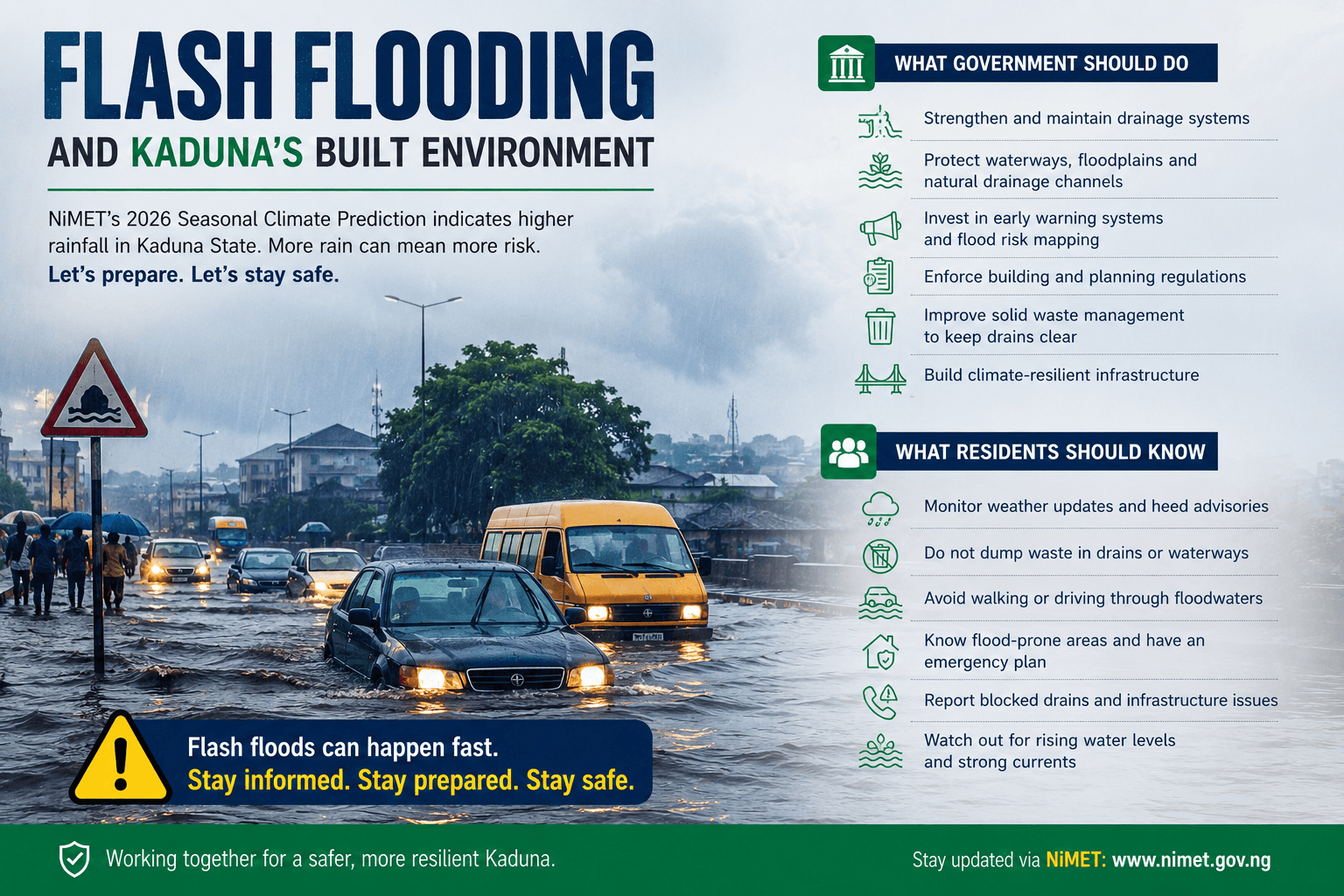
The release of the 2026 Seasonal Climate Prediction (SCP) by the Nigerian Meteorological Agency (NiMet) has once again drawn attention to the growing importance of climate-informed planning across Nigeria. Among the states identified for relatively higher rainfall and a potentially longer rainy season is Kaduna State. While increased rainfall may benefit agriculture and water resources, it also raises concerns about flash flooding, particularly within rapidly urbanising and densely built environments.
Flash flooding has become one of the most disruptive weather-related hazards affecting cities across Nigeria. Unlike riverine flooding, which often develops gradually as rivers overflow their banks, flash floods occur within a short period following intense rainfall. They can develop within minutes or hours, overwhelming drainage systems, inundating roads, damaging infrastructure, disrupting economic activities, and threatening lives.
For Kaduna State, the significance of the 2026 rainfall outlook extends beyond meteorological forecasts. It highlights the need for preparedness by government institutions, urban planners, businesses, communities, and residents. Understanding the nature of flash flooding, its implications for built environments, and the practical measures required to reduce risks is essential for effective adaptation.
Understanding Flash Flooding in Urban Areas
Flash floods occur when rainfall intensity exceeds the capacity of the ground and drainage systems to absorb or convey water. In urban environments, the risk is amplified by the concentration of impermeable surfaces such as roads, pavements, rooftops, and concrete structures. These surfaces limit natural infiltration, causing rainwater to flow rapidly across the landscape.
In many growing cities, urban expansion often outpaces drainage infrastructure development. As buildings, roads, and commercial facilities increase, natural water channels and flood plains may become constricted or altered. The result is a greater likelihood of surface runoff accumulating in low-lying areas during heavy rainfall events.
Kaduna's urban centres, including Kaduna metropolis and surrounding developing districts, have experienced substantial physical growth over recent decades. Such growth increases the importance of integrating flood-risk considerations into urban planning, infrastructure design, and environmental management.
What Higher Rainfall Could Mean for Kaduna's Built Environment
The projected increase in rainfall does not automatically translate into widespread flooding. However, it increases the probability of conditions that can trigger flash flood events, especially where vulnerabilities already exist.
Several impacts may be expected within built environments.
Pressure on Drainage Infrastructure
Drainage systems are designed based on anticipated rainfall volumes and flow rates. Intense storms can exceed these capacities, leading to overflow and localized flooding. Areas with blocked drains, inadequate channels, or aging infrastructure are particularly vulnerable.
Road Network Disruptions
Flash floods can render roads temporarily impassable, increase traffic congestion, damage road surfaces, and accelerate pavement deterioration. Transport disruptions may affect commuters, emergency responders, and commercial activities.
Property and Infrastructure Damage
Floodwater can infiltrate residential buildings, commercial premises, schools, healthcare facilities, and public institutions. Repeated exposure to flooding may weaken foundations, damage electrical systems, and increase maintenance costs.
Public Health Concerns
Floodwaters often carry waste materials, contaminants, and debris. Standing water after flood events can also create favourable conditions for disease vectors, increasing public health risks.
Economic Losses
Businesses may experience temporary closures, supply-chain interruptions, inventory damage, and reduced productivity. Households may face repair costs, property losses, and disruptions to livelihoods.
Increased Risks in Informal and High-Density Settlements
Areas characterised by limited drainage infrastructure, unregulated development, or proximity to natural waterways may face greater exposure to flood hazards. Vulnerability is often influenced not only by rainfall intensity but also by settlement patterns and infrastructure conditions.
What Government Should Do
Managing flash flood risk requires a combination of immediate interventions and long-term planning measures. Effective flood mitigation depends on coordinated action across multiple sectors.
Strengthen Urban Drainage Systems
Routine inspection, desilting, maintenance, and expansion of drainage networks should be prioritised before and during the rainy season. Critical drainage corridors should remain unobstructed to facilitate efficient water flow.
Improve Stormwater Management Planning
Urban planning authorities should incorporate modern stormwater management principles into development approvals. New projects should account for runoff generation and include appropriate drainage provisions.
Protect Natural Waterways and Flood Plains
Encroachment on natural drainage channels, wetlands, and flood-prone areas can significantly increase flood risk. Protecting these natural systems helps maintain their role in conveying and storing excess water during heavy rainfall.
Enhance Flood Risk Mapping
Accurate flood-risk assessments and hazard maps enable authorities to identify vulnerable communities, prioritise interventions, and guide future development decisions.
Invest in Early Warning Systems
Weather forecasts and flood advisories are most effective when translated into timely, accessible public information. Strengthening collaboration between meteorological agencies, emergency management institutions, local governments, and media organisations can improve preparedness.
Improve Solid Waste Management
Blocked drainage channels remain a major contributor to urban flooding. Effective waste collection systems, enforcement measures, and public awareness campaigns are necessary to reduce drain obstruction.
Enforce Building and Planning Regulations
Development control mechanisms should ensure that construction activities comply with approved standards, particularly in areas susceptible to flooding. Regulatory enforcement contributes to long-term urban resilience.
Build Climate-Resilient Infrastructure
Future infrastructure investments should account for changing rainfall patterns and extreme weather events. Roads, bridges, culverts, and drainage facilities should be designed with adequate capacity and resilience standards.
What Residents Should Know and Watch Out For
Flood risk reduction is not solely a government responsibility. Individual and community actions play a significant role in enhancing resilience.
Monitor Official Weather Information
Residents should pay close attention to forecasts and advisories issued by NiMet, emergency management agencies, and relevant authorities. Early information allows households and businesses to prepare appropriately.
Keep Drainage Paths Clear
Avoiding the disposal of waste into drains, gutters, and waterways helps maintain water flow during heavy rainfall and reduces the likelihood of localised flooding.
Identify Flood-Prone Locations
Households and businesses should understand their exposure to flood hazards, including proximity to drainage channels, low-lying terrain, and known flood pathways.
Develop Emergency Plans
Families should know evacuation routes, emergency contact numbers, and safe locations in the event of severe flooding. Important documents and valuables should be stored securely.
Avoid Floodwaters
Attempting to walk or drive through floodwaters can be dangerous. Water depth and current strength are often difficult to assess, and submerged hazards may not be visible.
Report Blocked Drainages and Infrastructure Problems
Prompt reporting of blocked drains, damaged culverts, or emerging flood risks can support timely intervention by relevant authorities.
Observe Warning Signs
Residents should be alert to rapidly rising water levels, unusually intense rainfall, overflowing drains, persistent ponding, and strong water currents. These conditions may indicate developing flash flood risks.
Building Long-Term Urban Resilience
The increasing frequency of extreme weather events globally has reinforced the need for climate-resilient cities. While seasonal forecasts provide valuable guidance, resilience ultimately depends on how effectively governments, institutions, businesses, and communities respond to available information.
For Kaduna State, the 2026 rainy season presents an opportunity to strengthen preparedness and improve urban flood management practices. Proactive planning, infrastructure maintenance, environmental stewardship, regulatory compliance, and public awareness can significantly reduce vulnerabilities.
Flash flooding is not solely a weather issue; it is also an urban management challenge. The degree to which rainfall becomes a disaster often depends on the condition of infrastructure, the effectiveness of planning systems, and the preparedness of communities. As forecasts indicate the likelihood of higher rainfall activity in Kaduna this season, the focus should remain on informed action, coordinated preparedness, and sustained investment in resilience.
By translating climate information into practical measures, Kaduna can better protect lives, infrastructure, economic activities, and the overall functionality of its built environment during the 2026 rainy season and beyond.